Showing posts with label Pharmaceuticals. Show all posts

Wednesday, December 05, 2007

Avandia Linked to Bone Loss in Mice

Research funded by the National Institutes of Health and the Howard Hughes Medical Institute, and appearing in this month's online issue of Nature Medicine, has shed light on why women in one study who took Avandia (rosiglitazone) had decreased bone density. (See our post from earlier this year: Questions Surrounding Avandia and its Effect on Bone.)

Bone is not the static organ many people think. It's constantly being reformed. Cells called osteoclasts break down bone while cells called osteoblasts lay down new bone.

These researchers found that mice given the PPAR-gamma agonist Avandia (Avandia is a thiazolidinedione, a class of insulin-sensitizing drugs under which Actos also falls) had increased activity of their osteoclasts, leading researchers to speculate:
"These findings have potential clinical implications, as they suggest that long-term rosiglitazone usage in the treatment of type 2 diabetes and insulin resistance may cause osteoporosis, owing to a combination of decreased bone formation and increased bone resorption."
If more studies support this link, it may necessitate screening patients for osteoporosis before starting or continuing them on these drugs.
________

Nature Medicine abstract:
PPAR-gamma Regulates osteoclastogenesis in Mice

News summaries:
Diabetes Drug Link To Weak Bones
Diabetes Drug May Increase Bone Thinning

Sunday, November 18, 2007

New Ad for Actos in Wake of Avandia's Revised Safety Warning

On the heels of Avandia's new safety warning addressing a potential increased risk for heart attack (see previous post), Takeda, maker of Actos (pioglitazone), plans to launch a big advertising campaign using the headline:
"If you have type 2 diabetes, Actos has been shown to lower blood sugar without increasing your risk of having a heart attack or stroke."
The FDA reviewed cardiovascular data from Takeda's PROactive study and approved this claim.

Avandia and Actos are the only drugs in the class of diabetes medications known as thiazolidinediones. They work by increasing insulin sensitivity.

Both drugs, however, may worsen heart failure, a condition in which the heart does not adequately pump blood, and are labeled as such. Below is Actos' boxed warning regarding heart failure:
Thiazolidinediones (TZDs), including ACTOS, cause or exacerbate congestive heart failure (CHF) in some patients. After initiation of ACTOS and after dose increases, observe patients carefully for signs and symptoms of heart failure (including excessive rapid weight gain, dyspnea, and/or edema). If these signs and symptoms develop, the heart failure should be managed according to current standards of care. Furthermore, discontinuation or dose reduction of ACTOS must be considered.

ACTOS is not recommended in patients with symptomatic heart failure. Initiation of ACTOS in patients with established NYHA Class III or IV heart failure is contraindicated.
________

Takeda's press release responding to Avandia's new safety warning:
Re. U.S. Food and Drug Administration Decision Summary

Avandia to be Labeled with New Warning

The FDA requested that GlaxoSmithKline (GSK), makers of Avandia (rosiglitazone), add new information to the existing warning on the drug's label. The new warning will address the potential increased risk for heart attacks. Last week, GSK agreed.

The revision of Avandia's existing boxed warning – FDA's strongest form of warning – includes the following statement:
"A meta-analysis of 42 clinical studies (mean duration 6 months; 14,237 total patients), most of which compared Avandia to placebo, showed Avandia to be associated with an increased risk of myocardial ischemic events such as angina or myocardial infarction. Three other studies (mean duration 41 months; 14,067 patients), comparing Avandia to some other approved oral antidiabetic agents or placebo, have not confirmed or excluded this risk. In their entirety, the available data on the risk of myocardial ischemia are inconclusive."
The FDA says Avandia will remain on the market while they continue their safety assessment. (FDA has requested, and GSK has agreed, that GSK conduct a new long-term study to evaluate Avandia's cardiovascular risk.)
________

FDA's press release:
FDA Adds Boxed Warning For Heart-Related Risks To Anti-Diabetes Drug Avandia

GSK's press release:
GlaxoSmithKline Revises US Labeling For Avandia

Saturday, October 20, 2007

Caution Regarding Byetta

The FDA this week warned healthcare workers to be on the lookout for pancreas inflammation in people taking Byetta (exenetide) to control their blood glucose. The warning stemmed from 30 postmarketing reports of acute pancreatitis in people taking Byetta.

The pancreas is a small organ that sits behind the stomach. It releases insulin and other substances needed for digestion.

MedLine lists these symptoms of pancreatitis:
  • Abdominal pain
  • Anxiety
  • Chills
  • Clammy skin
  • Fatty stools
  • Fever
  • Mild jaundice (yellow skin)
  • Nausea
  • Sweating
  • Weakness
  • Weight loss
If you're experiencing any of the above symptoms, see your doc. Pancreatitis can be ruled out by checking levels of certain chemicals in blood, or by imaging procedures.

Labeling Changes
"FDA has asked and the maker of Byetta, Amylin Pharmaceuticals, Inc. has agreed to include information about acute pancreatitis in the PRECAUTIONS section of the product label."
- FDA Alert, Exenatide (Byetta)
________

Monday, August 20, 2007

A Heart Attack Is A Hard Lesson

The New York Times posted an article this morning on the importance of treating various aspects of the metabolic syndrome that accompany diabetes, not just blood glucose:

Looking Past Blood Sugar to Survive With Diabetes

It chronicles the story of Dave Smith, a 43-year-old pastor from Fairmont, Minnesota. He was diagnosed with type 2 diabetes when he was 34. Since the time of his diagnosis, he dieted, watched his carbohydrate intake, lost weight, and took medications to lower his blood glucose. When that proved ineffective, he added insulin to the mix.

Eight years of failing to address conditions that often accompany diabetes (e.g. high blood cholesterol and high blood pressure) proved a hard lesson for Mr. Smith and his healthcare providers. He landed in the hospital with a major heart attack - 90% of a prime artery to his heart was blocked.

You can watch Mr. Smith describe his ordeal by clicking the photo below:


________

Wednesday, May 23, 2007

Avandia Linked to Heart Attacks

The reason we treat diabetes - the reason we work to keep blood glucose within a normal range - is to reduce the effect of diabetic complications, the most serious being heart disease which is the leading cause of death among people with diabetes.

So it's worrisome that an analysis published in this week's New England Journal of Medicine (NEJM) concluded:
"Rosiglitazone [Avandia] was associated with a significant increase in the risk of myocardial infarction."
GlaxoSmithKline, the maker of Avandia, had a swift response:
"GSK strongly disagrees with the conclusions reached in the NEJM article, which are based on incomplete evidence and a methodology that the author admits has significant limitations."

Background

Avandia was approved by the FDA in 1999 for the treatment of type 2 diabetes. It is a member of a class of drugs known as thiazolidinediones. These drugs act by binding to peroxisome proliferator-activated receptors (PPARs), a group of receptor molecules inside the cell nucleus. Each drug in the class works a little differently, but they all lower blood sugar by increasing insulin sensitivity.

There have been 3 drugs of this class approved for use in diabetes:
  • Avandia (rosiglitazone) approved by the FDA in 1999.
  • Actos (pioglitazone) approved by the FDA in 1999.
  • Rezulin (troglitazone) approved by the FDA in 1997. Rezulin became associated with liver inflammation and was withdrawn from the US market in 2000.
As of today, there has been no recall of the drug. The FDA did issue a safety alert that addresses the findings of this study. They are in the process of conducting their own analysis, both to confirm any risk involved with taking Avandia, and to determine how that risk compares with that of the other drug in this class, Takeda's Actos. There may be regulatory action in the future.

For now, the FDA advises:
"Patients who are taking Avandia, especially those who are known to have underlying heart disease or who are at high risk of heart attack should talk to their doctor about this new information as they evaluate the available treatment options for their type 2 diabetes."
________

For the NEJM article that spurred the FDA's safety alert (free full access):
Effect of Rosiglitazone on the Risk of Myocardial Infarction and Death from Cardiovascular Causes

For the FDA's safety alert:
FDA Issues Safety Alert on Avandia

For GlaxoSmithKline's press releases:
May 21, 2007 - GlaxoSmithKline strongly defends its record on Avandia
May 21, 2007 - GlaxoSmithKline responds to NEJM article on Avandia

For Avandia's website:
Avandia (rosiglitazone maleate)

News Summaries:
Diabetes Drug Avandia Linked To Heart Risks; Vioxx Parallels Cited
"We Don't Need a Public Panic."

Monday, April 02, 2007

Results of the FAME Trial: Improved Pharmacy Care = Improved Patient Outcomes

You're over 65 and you've been prescribed to take at least 4 medications for chronic conditions each day, at various times throughout the day. Do you take them religiously?

The Federal Study of Adherence to Medications in the Elderly (FAME) was born out of the notion that many people, especially the elderly, fail to adhere to their prescribed drug regimen, leading to a higher risk for hospitalization and higher health care costs.

FAME researchers enlisted 200 men and women who fit the description above (>65, 4 meds). After measuring their usual adherence during a 2-month run-in phase, they placed them on a comprehensive pharmacy care program.

The program had three elements:
  • An initial 1 hour meeting with a pharmacist to provide education on prescribed medications.
  • Dispensing of medications in daily, time-specific blister packs (a replacement for separate bottles).
  • Follow-up 1/2 hour meetings with the pharmacist every 2 months.
Might your adherence improve if your meds were dispensed in individualized disposable blister packs, sorted by time of day, and day of month? Here's an example of a blister pack of medications used in the study:


Study Findings

During the run-in phase, only 61% of participants were taking their medications as prescribed. During the 6-month pharmacy care intervention, this figure jumped to 97%.

As a result of the improved adherence, clinically significant improvements were seen in blood pressure and LDL cholesterol levels.

Although there would be an initial cost for pharmacist involvement and individualized drug packaging, the improvements in medication adherence, and subsequent patient health ... not to mention savings in healthcare costs ... may foster adoption of these changes in the future.

________

For a summary of the study:
Federal Study of Adherence to Medications (FAME): Impact of a Medication Adherence Program on Control of Lipids and Blood Pressure

Info on FAME clinical trial:
Federal Study of Adherence to Medications in the Elderly (FAME)

Source for photo and graphs: American College of Cardiology Foundation @ Cardiosource.com

Wednesday, March 28, 2007

New Questionable Trend for Diabetes Prevention in Children


As overweight and obesity become more prevalent among children, increasing their risk for diabetes, doctors are turning to medications for help. One drug they're turning to is Adderall, approved for the treatment of ADHD (attention deficit and hyperactivity disorder), but not for weight loss.

ADHD Drug Use For Youth Obesity Raises Ethical Questions

Adderall's active ingredients include dextroamphetamine and other amphetamine salts. Amphetamines are stimulants. They increase alertness, blood pressure, heart rate, and respiration. They also decrease appetite, a side effect that's being capitalized upon for weight loss.

Although the practice of prescribing Adderall "off label" for weight loss is legal, it doesn't address one of the cornerstones of diabetes prevention: behavior modification. The establishment of healthy eating and exercise behaviors is vital in both preventing diabetes, and managing it once a diagnosis is made.

The FDA has a fact sheet and news page devoted to Adderall:
Adderall and Adderall XR (amphetamines) Information

Wednesday, February 14, 2007

Questions Surrounding Avandia® and its Effect on Bone


A small study to be published in an upcoming issue of the Journal of Clinical Endocrinology & Metabolism found that postmenopausal women who took Avandia® (rosiglitazone) at 8mg/day for 14 weeks had greater reductions in hip bone density than women in a control group:
  • - Total hip bone density fell in the Avandia group by 1.9%
  • - Total hip bone density fell in the placebo group by 0.2%
Leading authors to conclude:
"Short-term therapy with rosiglitazone exerts detrimental skeletal effects, by inhibiting bone formation."

A reduction in bone density could increase the risk of fractures. That won't be welcome news to women with diabetes who already experience an increased risk of fractures - a finding reported by this journal last year.

Reuters reported:
"Morgan Stanley said in a note that an osteoporosis warning was now "very likely" to be added to the drug's label."

________

Avandia study, free author manuscript (pdf):
The peroxisome-proliferator-activated receptor-gamma agonist rosiglitazone decreases bone formation and one mineral density in healthy postmenopausal women: a randomized, controlled trial

Avandia study, abstract:
The peroxisome-proliferator-activated receptor-gamma agonist rosiglitazone decreases bone formation and bone mineral density in healthy postmenopausal women: a randomized, controlled trial

Reuters news summary:
New study fuels bone fears over Glaxo's Avandia

JCEM's diabetes and bone fracture study, abstract:
Risk of Fracture in Women with Type 2 Diabetes: the Women’s Health Initiative Observational Study

Monday, January 29, 2007

Cymbalta Found to Raise Blood Glucose


Question: What is the most common complication of diabetes in the US?

If you've had diabetes for a number of years and you experience the characteristic burning, tingling, or numbness in your feet, legs, or arms, you'll probably guess this right off. Those are symptoms of peripheral neuropathy or diabetic nerve pain, which, according to the FDA affects up to 62% of Americans with diabetes ... making it the most common diabetic complication.

The FDA approved Cymbalta (duloxetine HCl) in August, 2004 for the treatment of depression. A month later they approved it for the treatment of pain associated with diabetic peripheral neuropathy. This month, a study in Diabetes Care asked the question "Does Treatment With Duloxetine for Neuropathic Pain Impact Glycemic Control?" Their answer was yes:
"Duloxetine treatment resulted in modest increases in fasting plasma glucose in short- and long-term studies (0.50 and 0.67 mmol/l, respectively)." [Approximately 0.9 and 12.1 mg/dl respectively]

The increase was modest. If you're taking Cymbalta and it is effective at easing your symptoms, your doctor may decide not to make changes. Although, it's helpful to be aware of the medication's effect on blood glucose.

________

For the January, 2007 Diabetes Care article:
Does Treatment With Duloxetine for Neuropathic Pain Impact Glycemic Control?

For FDA's press release:
FDA Approves Drug for Neuropathic Pain Associated With Diabetes

For Cymbalta's site:
Cymbalta

Friday, January 26, 2007

Be Careful with Niacin


In light of Pfizer's decision to halt testing of its new cholesterol-lowering drug torcetrapib, the New York Times ran an article this week touting an old favorite, niacin:


An Old Cholesterol Remedy Is New Again

High dose niacin has been shown effective at raising HDL, the good cholesterol, and lowering triglycerides. Although niacin as nicotinic acid is available over-the-counter, it's better taken under a doctor's supervision, especially for someone with diabetes. High dose niacin can interfere with blood glucose levels:

"High-dose nicotinic acid may negatively effect glucose tolerance. Diabetics who take nicotinic acid for lipid-lowering, should have their serum glucose levels carefully monitored and the dose of their antidiabetic medications adjusted as necessary."
- Niacin (Nicotinic Acid), from PDRHealth

Monday, November 06, 2006

Broad Benefits of Actos Questioned


A recent review of 22 clinical trials involving 6,200 patients led researchers to conclude:
"Our results showed that published scientific studies of at least 24 weeks of pioglitazone [Actos] treatment in people with type 2 diabetes mellitus did not provide convincing evidence that patient-oriented outcomes like mortality, morbidity, adverse effects and health-related quality of life are positively influenced by this drug."
- Bernd Richter, MD, study's lead author.

The study appears in a recent publication of The Cochrane Library.

The authors did find that Actos™ improved measures of blood glucose. But how that benefit may translate into improved quality of life - both now and in the long term - is at the moment ambiguous.

Actos™ (pioglitazone) works by increasing the body's sensitivity to insulin, improving glucose uptake into cells and consequently lowering blood glucose. It's in a class of drugs called thiazolidinediones. GlaxoSmithKline's Avandia™ (rosiglitazone) also falls into this category. A major drawback to these drugs is fluid retention or edema.

It should be noted that no patient in any of the 22 trials was observed taking Actos for longer than 34.5 months (~ 2.8 years). It's possible that longer term use could benefit (or worsen) heart health and mortality over time. Further study should establish this.

________

For the study (abstract only):
Pioglitazone for type 2 diabetes mellitus

Some news summaries:
Widely Prescribed Diabetes Drug Falls Short Of Promise, Says New Review

Reassessing Diabetes Treatments: A New Report Raises Old Concerns About a Popular Diabetes Drug

Monday, October 30, 2006

Merck's Januvia™ Receives FDA Approval


On October 17, 2006, the FDA approved Merck's Januvia™ for type 2 diabetes.

Januvia (sitagliptin) is an incretin enhancer. For a brief primer on how these drugs work, visit our post:
New Diabetes Drugs on the Horizon: Incretin Enhancers

Merck states the recommended dose as 100 mg/day. The 100 mg tablets will be available in pharmacies in the near future. Price: $4.86/tablet.

________

For FDA's press release:
FDA Approves New Treatment for Diabetes

For Merck's press release:
FDA Approves Once-Daily JANUVIA™, the First and Only DPP-4 Inhibitor Available in the United States for Type 2 Diabetes

For Januvia's site:
Januvia

Monday, October 09, 2006

US Customs Permits Mail-order Drugs From Canada


Americans looking for reduced prices on their prescription drugs found those savings in mail-order purchases from pharmacies in Canada.

But last November (2005), the US Customs and Border Protection, a division of Homeland Security (HSD), stepped up confiscation of those drugs.

Lynn Hollinger, an HSD spokeswoman, said:
"We initiated this process because pharmaceuticals that are typically mailed into and out of the U.S. may pose a serious health risk to consumers, since it cannot be determined if the medication has been manufactured under FDA regulations."
- US Customs Sees the Light, The Ledger, October 8, 2006

The result ...
"Nancy Popkin was awaiting her regular mail delivery of Fosamax, an osteoporosis medication. Instead, she received a notice from the U.S. Department of Homeland Security that she was violating federal law."
- Susan Stranahan, "Where's My Medication?", AARP Bulletin, September 2006

In July of this year, Senators Nelson (D-FL) and Vitter (D-LA), hoping to quell this practice, sponsored an amendment (S. Amdt. 4548) to the Department of Homeland Security Appropriations Bill:
"To prohibit the United States Customs and Border Protection from preventing an individual not in the business of importing a prescription drug from importing an FDA-approved prescription drug."
- S. Amdt. 4548

The Amendment was passed in July, and the Appropriations Bill with the amendment was passed on September 25.

This is good news for individuals who want to purchase mail-order drugs from Canada:
"U.S. Customs and Border Protection told Congress this week that it would no longer confiscate mail-order prescription drugs coming into the states from Canada after intercepting more than 40,000 such packages in less than a year."
- Kris Hundley, Customs will stop seizing drugs from Canada, St. Petersburg Times, October 4, 2006

Monday, October 02, 2006

Avandia® for Prevention


GlaxoSmithKline's Avandia® (rosiglitazone maleate), a drug currently used to treat type 2 diabetes has shown to be preventative for that disease.
Researchers reporting in last week's Lancet found that after 3 years, 10.6% of people with a pre-diabetes condition1 who took 8 mg. Avandia daily progressed to type 2 diabetes, compared to 25% of a similar high-risk control group. Both groups received standard counseling on healthy eating and exercise.

Avandia reduced the risk of developing diabetes by 62% relative to a group that received just standard counseling.

For Comparison

The Diabetes Prevention Program Research Group found similar reductions although without medication.

Reporting in the New England Journal of Medicine in 2002, they estimated that 14.4% of people with a pre-diabetes condition who received intensive lifestyle intervention, but no drugs, progressed to type 2 diabetes after 3 years, compared to 28.9% of a similar high-risk control group who received just standard counseling on healthy eating and exercise.

Intensive lifestyle counseling reduced the risk of developing diabetes by 58% relative to a group that received just standard counseling.

Choices

Drugstore.com places the retail price for Avandia at $205 for a month's supply (30, 8mg tablets).

If your sugars have been running high and you're determined to avoid a diagnosis of diabetes - and money is no obstacle - Avandia may prove helpful.

If you're looking to avoid the cost or side effects (in the study, Avandia increased the risk for heart failure) of taking a drug, keep in mind that lifestyle changes, of the type described below, have proven highly effective at delaying the onset of diabetes.
The goals for the participants assigned to the intensive lifestyle intervention were to achieve and maintain a weight reduction of at least 7 percent of initial body weight through a healthy low-calorie, low-fat diet and to engage in physical activity of moderate intensity, such as brisk walking, for at least 150 minutes per week. A 16-lesson curriculum covering diet, exercise, and behavior modification was designed to help the participants achieve these goals. The curriculum, taught by case managers on a one-to-one basis during the first 24 weeks after enrollment, was flexible, culturally sensitive, and individualized. Subsequent individual sessions (usually monthly) and group sessions with the case managers were designed to reinforce the behavioral changes.

- The Diabetes Prevention Program Research Group, Reduction in the Incidence of Type 2 Diabetes with Lifestyle Intervention or Metformin


1 Participants had either impaired glucose tolerance (IGT), defined by a glucose level of 140-199 mg/dl, 2 hours after a 75 g glucose challenge; or impaired fasting glucose (IFG), defined by a fasting glucose level of 100-125 mg/dl; or both. Both of these conditions increase the risk of developing diabetes.

________

For The Lancet study (abstract available with free registration):
Effect of rosiglitazone on the frequency of diabetes in patients with impaired glucose tolerance or impaired fasting glucose: a randomized controlled trial

For The Diabetes Prevention Program Research Group's study (full article available with free registration):
Reduction in the Incidence of Type 2 Diabetes with Lifestyle Intervention or Metformin

For GlaxoSmithKline's press release (scroll down to September 15):
Avandia® reduces risk of progression from pre-diabetes to type 2 diabetes by 62 percent in largest ever diabetes prevention trial

Saturday, September 23, 2006

Wal-Mart to Charge $4 for Generics


As of yesterday, customers of Wal-Mart in the Tampa Bay, Florida area could purchase a 30-day supply of almost 300 commonly prescribed generic drugs for $4 each. The program will be available across Florida in January, and in additional states next year.

Not to be undercut, Target Corporation announced it would match Wal-Mart's lower prices beginning in the Tampa Bay area.

To see a list of all 291 generic drugs affected, visit Wal-Mart's press release, scroll to the bottom, and select "List of available $4 generic drugs".

Here's an excerpt of the diabetes medications:


________

For Wal-Mart's press release:
Wal-Mart Cuts Generic Prescription Medicines to $4

For Target's press release:
Target Corporation to Remain Competitive on Pricing; Lowering Prices on Number of Generic Drugs

Tuesday, May 23, 2006

Another Drug Bites the Dust: PargluvaTM


Last week, Bristol-Myers Squibb decided to halt development of its promising new diabetes drug, PargluvaTM (muraglitazar).
You may recall the news last September when an FDA advisory panel recommended the drug for approval. You may also recall an article in the Journal of the American Medical Association (JAMA) a month later that warned of Pargluva's link to increased risk for heart attack and stroke.

If approved, Pargluva would have become the first marketed drug in a relatively new class of compounds called glitazars. These drugs not only lower glucose, but can improve cholesterol levels. Both of these benefits were documented in a study appearing in this month's Diabetes Care which pitted Pargluva against a similar drug, Actos (pioglitazone).

In light of possible health risks associated with Pargluva, the FDA last year requested more information on the drug's cardiovascular safety profile. Bristol-Myers Squibb decided that the time required to run additional safety trials, up to 5 years, would not be worth the effort - given the diabetes drugs projected to become available in the coming years.

________

For Bristol-Myers press release:
Bristol-Myers Squibb Announces Discontinuation Of Development Of Muraglitazar, An Investigational Oral Treatment For Type 2 Diabetes

For the Diabetes Care, May 2006 study (abstract only):
Improvement of Glycemic Control, Triglycerides, and HDL Cholesterol Levels With Muraglitazar, a Dual (/) Peroxisome Proliferator–Activated Receptor Activator, in Patients With Type 2 Diabetes Inadequately Controlled With Metformin Monotherapy

For our September 2005 post:
New Diabetes Drug Gets FDA Panel Backing

For our October 2005 post:
PargluvaTM on Hold

Some news summaries:

New Drug Helps with Diabetes Control (Reuters)

Bristol Drops Diabetes Drug (New York Times)

Monday, May 22, 2006

New Weight Loss Drug in Clinical Trials


The drug is Oleoyl-estrone (OE). It is being developed by Manhattan Pharmaceuticals, Inc. which last week received the go-ahead to proceed with a Phase IIa trial. The study will be single-center and involve 100 subjects assigned to 4 treatment groups.

OE is a synthetic form of a molecule that occurs naturally in the body. Preliminary studies show the drug beneficial for blood glucose and cholesterol levels, as well as weight loss.

How does it work?
"Oleoyl-estrone ... appears to reset the body's ponderostat, the 'food control center' located in the hypothalamus of the brain that detects and integrates signals controlling appetite and metabolic behavior. Peripherally, OE appears to cause reduced storage of fat ... and allows skeletal muscle to use fat as an alternate energy source."
- Alan G. Harris, MD, PhD, Manhattan's chief medical officer.


The race for a cure.

With 65% of Americans currently overweight, a number expected to rise in coming years, the market opportunity for a safe and effective weight loss drug is substantial - projected to be in the multiple-billions of dollars. Current therapies have been dogged by side effects or failure to sustain weight loss after therapy ends. OE is one in a line-up that hopes to fill this void.

________

Manhattan Pharmaceuticals press release:
Manhattan Pharmaceuticals Receives SwissMedic's Approval to Commence Phase IIa Trial With OE

Saturday, January 28, 2006

FDA Approves Inhaled Insulin - In Stores By Summer

The FDA yesterday approved Exubera®, the powered inhalable insulin developed by Pfizer and Sanofi-Aventis, for the treatment of diabetes. (Pfizer since acquired sole worldwide rights.)

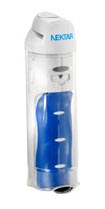
Inhaled insulin is a breakthrough for the drug's administration which until now required injection - by needle, pen, or pump. Insulin cannot be taken orally since the protein is broken down by digestive enzymes. Exubera is designed to enter the lungs though the mouth via an inhaler, originally designed by Nektar Therapeutics (shown).

Inhaled insulin has the potential to ease the burden of injection, but there are a few caveats:
  • It's not recommended for smokers, those with asthma, bronchitis, emphysema, or other unstable lung conditions.
  • Currently, it can only replace the short-acting, bolus dose of insulin. If a longer-acting basal dose is needed, that would need to be injected.
Price may also be a consideration. The New York Times reports that:
"Exubera would cost between $120 and $150 a month, roughly comparable to the price of pills taken by some people with Type 2 diabetes but about three times the price of injectable insulin."

Exubera should be available by prescription this summer. Pfizer has posted the following hotline for consumers or health care providers who'd like more information: 1-800-EXUBERA.

________

FDA Press release:
FDA Approves First Ever Inhaled Insulin Combination Product for Treatment of Diabetes

Pfizer press release:
Pfizer Receives FDA Approval for Exubera, the First Inhalable Form of Insulin for Controlling Type 1 and Type 2 Diabetes in Adults

Some news summaries:
US Regulators Approve Insulin in Inhaled Form
FDA Approves Inhaled Insulin for Diabetics

Monday, January 23, 2006

Update: FDA Considers an OTC Version of the Fat-blocker Xenical

The FDA advisory committee voted 11 to 3 today to recommend the OTC version of orlistat* for final FDA approval.

The FDA usually follows the recommendation of its advisory committees. Full FDA approval could be months away.

* If you have diabetes, its advisable to consult with your doctor before taking non-prescription orlistat (Alli). Its use may necessitate changes to diabetes medications.

________

GlaxoSmithKline's Press Release:
FDA Joint Advisory Committee Recommends Approval of Orlistat 60 MG Capsules for Over-the-counter Use


News summaries:
Diet Pill Gets Closer to Store Shelves
FDA Panel Recommends OTC Weight-Loss Pill