 You won't find the answer to that question in the ADA's new Nutrition Recommendations:
Nutrition Recommendations And Interventions For Diabetes, A Position Statement Of The American Diabetes Association, Diabetes Care, January 2008
You will however find the ADA's first official endorsement of low-carbohydrate diets, a stand they previously shied away from owing to lack of evidence on safety and effectiveness:
"For weight loss, either low-carbohydrate or low-fat calorie-restricted diets may be effective in the short term (up to 1 year)."Their support for a low-carb eating plan, albeit for one year, isn't so much the highlight of these new recommendations as is their support for individualized meal plans. Speaking in a press release that accompanied the Position Statement, Ann Albright, ADA President of Health Care & Education said:1
- ADA 2008 Position Statement
"The evidence is clear that both low-carbohydrate and low-fat calorie restricted diets result in similar weight loss at one year. We're not endorsing either of these weight-loss plans over any other method of losing weight. What we want health-care providers to know is that it's important for patients to choose a plan that works for them."
Ann Albright, PhD, RD, President, Health Care & Education, ADA
1 ADA press release, December 28, 2007:
ADA Issues New Clinical Practice Recommendations, New Advice for Doctors About Low-Fat, Low-Carb Restricted Diets For Short-Term Weight Loss


 Trans-fat, like saturated fat and dietary cholesterol, has been found to raise LDL cholesterol, increasing risk for heart disease. Trans-fats may also increase insulin resistance in people with diabetes. (See
 While I'm talking about how food components may affect blood glucose, I thought I'd pass along this news coming out of the
  Researchers at the University of Massachusetts Amherst analyzed samples of dairy and soy yogurts. They found ...
 Iron's link to diabetes has been in the news over the last few years.
 The
The  The Holidays are here. You may find yourself on the receiving end of that question more often. If you have diabetes and take insulin or oral diabetes medications, keep in mind that alcohol can lower blood glucose.
 The Baylor College of Medicine has published a brochure to help families deal with issues of overweight in its younger members.
 Researchers in Mexico found when they fed hyperinsulinemic rats (rats with high blood levels of insulin) diets high in soy protein, it decreased the amount of fat in the rats' liver.
 We know olive oil is good for the heart. Its monounsaturated fats have a reputation for lowering LDL (bad cholesterol) and raising HDL (good cholesterol).
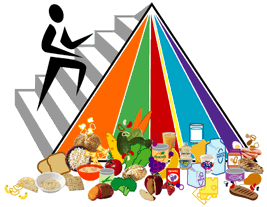 The USDA unveiled a new website to accompany their new food guide pyramid back in April. It's worth a visit. You can get a personalized meal plan by entering your age, gender, and physical activity level. There's even a place to keep track of your meals along with nutrient analysis and recommendations.