 Earlier I wrote about dogs that can sniff out a low blood sugar.
Here's a related story about how lab instruments may be able to sniff out early diabetes, as well as liver disorders and certain cancers, from compounds in our breath.
Research To Develop A Breath Test For Cancer And Diabetes
Researchers at Swansea University in the UK are using various technologies (gas chromatography, mass spectrometry, and thermal desorption) to analyze the concentrations of volatile organic compounds (VOCs) in breath.
Dr Masood Yousef, a senior research assistant at Swansea:
"Studies have shown that high concentrations of certain VOCs in breath can correlate with disease. For example, the odour of 'pear drops' esters and acetone in relation to diabetes, ammonia in relation to hepatitis, and dimethyl sulphide to cirrhosis. There are also certain compounds that seem to mark out particular types of cancer."A breath test for diabetes and other conditions would be an inexpensive, safe, and convenient screening tool for early detection. Interventions could take place before a person presents with symptoms, improving long-term outlook. Let's hope researchers work out the details soon!


 In the warmer and more humid conditions of summer, it's important to store your test strips and meter away from heat and direct sunlight. Heat and moisture can damage both the strip and the meter.
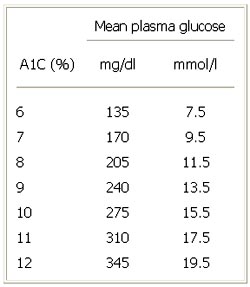
  You've just had an A1C (hemoglobin A1C) test. The result was 7.5%. What does that mean? How does that relate to the average blood glucose readings you take at home? If preliminary results from the ADAGE trial hold, that A1C lab result may be reported as average glucose, in the familiar mg/dl reading, beginning next year.





 This coming Tuesday, March 28th, has been designated
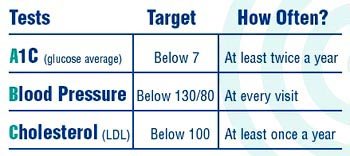
  Having diabetes disposes you to a unique set of periodic check-ups, e.g. foot exams and kidney tests. (See
  Many people start the new year with a new calendar, appointment book or journal.
 Visit the
  The Centers for Disease Control and Prevention (CDC) warns that type 2 diabetes is a "
 If you're active, watch your diet, and have been successful at maintaining a healthful weight, you may have managed to keep your cholesterol levels under control ... or not. Lifestyle wields control over your cholesterol response but so do your genes. It's quite possible that no matter how hard you work to keep your cholesterol levels down, the influence of your family's genes could thwart it.