Showing posts with label Diabetic Complications. Show all posts

Monday, August 20, 2007

A Heart Attack Is A Hard Lesson

The New York Times posted an article this morning on the importance of treating various aspects of the metabolic syndrome that accompany diabetes, not just blood glucose:

Looking Past Blood Sugar to Survive With Diabetes

It chronicles the story of Dave Smith, a 43-year-old pastor from Fairmont, Minnesota. He was diagnosed with type 2 diabetes when he was 34. Since the time of his diagnosis, he dieted, watched his carbohydrate intake, lost weight, and took medications to lower his blood glucose. When that proved ineffective, he added insulin to the mix.

Eight years of failing to address conditions that often accompany diabetes (e.g. high blood cholesterol and high blood pressure) proved a hard lesson for Mr. Smith and his healthcare providers. He landed in the hospital with a major heart attack - 90% of a prime artery to his heart was blocked.

You can watch Mr. Smith describe his ordeal by clicking the photo below:


________

Tuesday, February 27, 2007

American Heart Association - 2007 Guidelines for Prevention of CVD


The American Heart Association last week published an update to their guidelines for the prevention of cardiovascular disease (CVD). Their paper addressed women specifically.

Here is the table of recommendations included in their paper:


You can click the pictures above for a larger version, or you can download their entire paper at:
Evidence-Based Guidelines for Cardiovascular Disease Prevention in Women: 2007 Update


For people with diabetes, heart disease looms as the most fatal complication. The National Diabetes Education Program (NDEP) describes some links between the two:
  • CVD is the leading cause of early death among people with diabetes - about 65% of them die from heart disease and stroke.

  • Adults with diabetes are 2 to 4 times more likely to have heart disease or suffer a stroke than
    people without diabetes.

  • High blood glucose in adults with diabetes increases the risk for heart attack, stroke, angina, and
    coronary artery disease.

  • People with type 2 diabetes also have high rates of high blood pressure, lipid problems, and obesity,
    which contribute to their high rates of CVD.

  • Smoking doubles the risk of CVD in people with diabetes.

    - NDEP, The Link Between Diabetes and Cardiovascular Disease

In addition to their recommendations for all women (e.g. don't smoke, be physically active, eat a healthful diet), the AHA 2007 Guidelines gave some special advice for women with diabetes.
  • * Achieve an HbA1c of <7% through medication (and lifestyle)
  • * Blood pressure of >130/80 mm Hg should be treated with medication (and lifestyle)
  • * LDL cholesterol of >100 mg/dl should be treated with medication (and lifestyle)
  • * Aspirin (75 to 325 mg/day) should be used in high risk (i.e. diabetic) women unless it cannot be tolerated.
  • * ACE inhibitors or ARB's (for blood pressure management) should be used.

If you fall into any of the above categories and are not receiving treatment, you may want to discuss your therapies with your doctor. You could even bring the above AHA Tables, or their entire paper, with you.

Wednesday, February 14, 2007

Questions Surrounding Avandia® and its Effect on Bone


A small study to be published in an upcoming issue of the Journal of Clinical Endocrinology & Metabolism found that postmenopausal women who took Avandia® (rosiglitazone) at 8mg/day for 14 weeks had greater reductions in hip bone density than women in a control group:
  • - Total hip bone density fell in the Avandia group by 1.9%
  • - Total hip bone density fell in the placebo group by 0.2%
Leading authors to conclude:
"Short-term therapy with rosiglitazone exerts detrimental skeletal effects, by inhibiting bone formation."

A reduction in bone density could increase the risk of fractures. That won't be welcome news to women with diabetes who already experience an increased risk of fractures - a finding reported by this journal last year.

Reuters reported:
"Morgan Stanley said in a note that an osteoporosis warning was now "very likely" to be added to the drug's label."

________

Avandia study, free author manuscript (pdf):
The peroxisome-proliferator-activated receptor-gamma agonist rosiglitazone decreases bone formation and one mineral density in healthy postmenopausal women: a randomized, controlled trial

Avandia study, abstract:
The peroxisome-proliferator-activated receptor-gamma agonist rosiglitazone decreases bone formation and bone mineral density in healthy postmenopausal women: a randomized, controlled trial

Reuters news summary:
New study fuels bone fears over Glaxo's Avandia

JCEM's diabetes and bone fracture study, abstract:
Risk of Fracture in Women with Type 2 Diabetes: the Women’s Health Initiative Observational Study

Saturday, January 27, 2007

Protect Your Feet


Sam, over on the chat board, recommended rubbing petroleum jelly on your feet to protect them, as well as wearing comfortable socks that are "Not too tight in the ankles! Don't ever impede your circulation." This is great advice.

Foot problems are common complications of diabetes. Managing blood glucose is the best way to prevent them. But conscientious foot care ranks up there with BG control as necessary for staving off effects of nerve damage and poor circulation ... conditions at the root of foot problems for people with diabetes.

The National Diabetes Education Program (NDEP) list these tips:

- Check your feet every day.
- Wash your feet every day.
- Keep the skin soft and smooth.
- Smooth corns and calluses gently.
- Trim your toenails each week or when needed.
- Wear shoes and socks at all times.
- Protect your feet from hot and cold.

For more tips along with more specific care instructions, visit the NDEP's Foot Care site.

Thursday, August 24, 2006

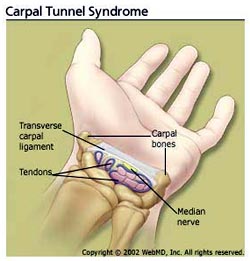
Carpal Tunnel Forewarns Diabetes


Researchers from the UK, reporting in this month's Diabetes Care, investigated whether the incidence of carpal tunnel syndrome was increased among people who went on to develop diabetes years later:
"The researchers found that people who had been diagnosed with carpal tunnel syndrome were 36% more likely to later be diagnosed with diabetes, regardless of other diabetes risk factors."
- WebMD, Carpal Tunnel May Predict Diabetes

Certainly, having carpal tunnel syndrome does not ensure a diagnosis of diabetes. But it can be a heads-up to have your blood sugar checked. High blood sugars, even in the pre-diabetes state, can have a damaging impact on nerves.

________

For the Diabetes Care study:
Increased Incidence of Carpal Tunnel Syndrome up to 10 Years Before Diagnosis of Diabetes

For WebMD's review of carpal tunnel syndrome:
Carpal Tunnel Syndrome

Thursday, July 06, 2006

People With Diabetes Risk Heart Problems 15 Years Earlier


Researchers in Canada studied health claims of almost the entire adult population of Ontario between 1994 and 2000. That included 379,000 people with diabetes, and over 9 million without diabetes.

In an article in last week's Lancet, they reported that, when it came to cardiovascular disease, having diabetes was equivalent to ageing 15 years.

According to Dr. Gillian Booth, lead author of the study:
"We found on average that people who are 40 with diabetes have the same level of risk as someone without diabetes who is 55, and that was the same virtually for men and women."

She advised:
"Middle-aged and older people with diabetes seem on average to be at high risk of CVD, thus aggressive risk-reduction strategies are warranted for them."

________

For the study (abstract):
Relation between age and cardiovascular disease in men and women with diabetes compared with non-diabetic people: a population-based retrospective cohort study

News summaries:
Diabetes adds 15 years: Study
Diabetes Confers Health Risk Equivalent To Ageing 15 Years

Monday, January 16, 2006

New York Times - 4-Part Series on Diabetes

Here's the entire series the New York Times ran last week. You may need to register for access, but it's free.
Click here to view the New York Times' companion picture slide show. (Some stirring photos.)

Sunday, November 27, 2005

Diabetes Increases Colorectal Cancer Risk

Two recent studies highlight the importance of getting screened for colorectal cancer, especially if you have diabetes.

The first is a study from researchers in South Carolina that was reported on October 31 at the 70th Annual Scientific Meeting of the American College of Gastroenterology (ACG). It found that people with diabetes were 40% more likely to have colon cancer than people without diabetes. The findings were a result of a cross-sectional study that analyzed data from 226,953 participants in the 1997-2003 National Health Interview Survey.

The second is a study from researchers in Sweden that appeared in the November 16 issue of the Journal of the National Cancer Institute. It found that diabetes was associated with a 30% higher risk for cancer of the colon and rectum. The increased risk was similar for men and women. The findings were a result of a meta-analysis of 15 studies that collectively included over 2.5 million participants.

The Centers for Disease Control (CDC) have designed a campaign, Screen for Life, to encourage people 50 and older to get screened for colorectal cancer.

Academy Award–winning actor Morgan Freeman and NBC Today Show host Katie Couric have joined the Screen for Life campaign to help get the word out on the importance of regular screenings.

From Mr. Freeman's public service announcement:
"Has anyone ever said, 'You’re the picture of health'? You look healthy and you feel fine, but that may not be the full picture. Colorectal cancer is the number two-cancer killer. It doesn't always cause symptoms, but it can be prevented. Screening can find precancerous polyps, so they can be removed before they turn into cancer. So get screened. Make sure you are the picture of health."

You can watch a video of Mr. Freeman's public service announcement here.

________

For ACG's press release:
Diabetes and Risk of Colorectal Cancer

For the Journal of the National Cancer Institute's study:
Diabetes Mellitus and Risk of Colorectal Cancer: A Meta-Analysis

For CDC's Screen for Life Campaign:
Screen for Life: National Colorectal Cancer Action Campaign

Tuesday, November 22, 2005

Hearing Loss

One in three Americans over the age of 60 have some degree of hearing loss. That figure jumps to 1 in 2 for those over 80.

For those with diabetes, the prevalence may be even higher.

An article that appeared in the Fall 2003 issue of Hearing Health explored the relationship between diabetes and hearing loss:
"Since vascular and nerve tissues play predominant roles in auditory function, any disease that has the capacity to damage their cells has potential to negatively affect the various hearing organs. A link between hearing and diabetes seems likely indeed if the rich blood supply to the cochlea and/or the nerve centers in the hearing pathways, including the brain, are affected."

The National Institute on Deafness and Other Communication Disorders (NIDCD) has an easy-to-read and comprehensive tutorial on hearing loss, including its causes, symptoms, treatment, and prevention. It recommends that if you answer "Yes" to three or more of the following questions, you have your hearing checked by a doctor.
  • Do I have a problem hearing on the telephone?
  • Do I have trouble hearing when there is noise in the background?
  • Is it hard for me to follow a conversation when two or more people talk at once?
  • Do I have to strain to understand a conversation?
  • Do many people I talk to seem to mumble or not speak clearly?
  • Do I misunderstand what others are saying and respond inappropriately?
  • Do I often ask people to repeat themselves?
  • Do I have trouble understanding the speech of women and children?
  • Do people complain that I turn the TV volume up too high?
  • Do I hear a ringing, roaring, or hissing sound a lot?
  • Do some sounds seem too loud?

Finally, if you're having difficulty hearing, it may not be just a problem with your ears. Comprehension of what we hear takes place in the brain. As we age, the brain may lose some of its ability to filter out background noise.

Audiologists from the University of California, San Francisco, believe we can train our brain to recover listening skills - with or without a hearing aid. They've helped design an interactive software program with listening exercises that can be used on a personal computer. Free demonstration software is available at neurotone.com.*

________

For Hearing Health article:
Diabetes and Hearing Loss: Exploring Connections

For NIDCD's tutorial:
NIH Senior Health: Hearing Loss

For NeuroTone's Listening Software
Listening & Communication Enhancement (LACE) Training System

* Not an endorsement. For information only.

Wednesday, November 16, 2005

World Diabetes Day 2005: Put Feet First

Throughout the world, foot problems are one of the most serious and costly complications of diabetes. Up to 70% of leg amputations are diabetes-related.

To increase awareness of diabetic foot complications, the World Health Organization (WHO) and the International Diabetes Federation (IDF) have devoted World Diabetes Day 2005 to this condition.

Nerve damage and inadequate blood supply are at the root of foot problems which can lead to dangerous ulcers. In fact, 85% of lower-body amputations are preceded by a foot ulcer. And in developed countries such as the US, 1 in 6 people with diabetes will have an ulcer during their lifetime.

The IDF has listed some warning signs of impending foot problems:
  • Swelling of the foot or ankle
  • Very cold feet or legs
  • Color changes: red, blue or black discoloration
  • Pain in legs at rest or while walking
  • Open sores, no matter how small
  • Non healing wounds
  • In-growing toe nails
  • Corns and calluses
  • Lack of hair growth on the foot
For more information, visit the IDF's promotional site at World Diabetes Day 2005.

Sunday, September 25, 2005

Today is World Heart Day

Visit the World Heart Day's site for news and activities in your region. (They have a section on diabetes that includes a number of recent news articles.)

The World Health Organization (WHO), a major sponsor of World Heart Day, is warning that the rapid increase in weight seen globally forecasts a daunting burden in caring for chronic diseases linked to weight. They estimate there are a billion people worldwide who are currently overweight; and they predict that number to rise by 50% over the next 10 years if trends continue.

Overweight and obesity are risk factors for many chronic conditions, including type 2 diabetes.

Yet, according to Dr. Robert Beaglehole, WHO Director of Chronic Diseases and Health Promotion, many chronic diseases attributable to weight are preventable:
"Approximately 80% of heart disease, stroke, and type 2 diabetes, and 40% of cancer could be avoided through healthy diet, regular physical activity and avoidance of tobacco use."

One method of determining overweight or obesity is by assessment of a person's Body Mass Index (BMI).

BMI Categories:
Overweight is a BMI ≥ 25
Obesity is a BMI ≥ 30

Do you know your BMI?

If not, you can calculate it here. Just enter your height and weight.

________

Links:

World Heart Day - Sunday, September 25

The World Health Organization Warns of the Rising Threat of Heart Disease and Stroke as Overweight and Obesity Rapidly Increase

National Institutes of Health - BMI Calculator

Friday, July 29, 2005

Link Between Obesity and Diabetes

It's recognized that people who are obese have a higher risk for developing type 2 diabetes. Now, researchers reporting in the July 21 issue of Nature have found a link between the two, in the form of a protein - specifically, retinol binding protein 4 (RBP4) - that's secreted by fat cells.
RBP4 has a known function as a transporter of Vitamin A in the body. These investigators found that high levels of the protein can also cause cells to be more resistant to insulin - a condition that precedes diabetes.

This knowledge may lead to the development of drugs that can lower levels of this protein, adding to the arsenal of diabetes' therapies.

________

For a summary of the study:
Study identifies fat-secreted protein linked to insulin resistance

For the study itself:
Serum retinol binding protein 4 contributes to insulin resistance in obesity and type 2 diabetes

Wednesday, June 29, 2005

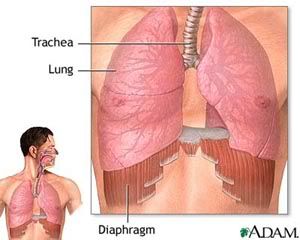
Diabetic Patients at Increased Risk for Infection

Infections are difficult to manage for a healthy person, let alone someone with diabetes. Illness can cause blood glucose levels to rise and makes managing those levels even more challenging.
Now a study set to appear in the August 1 issue of Clinical Infectious Diseases adds to the reservoir of clinical data supporting the notion that people with diabetes get sick more often than people without the disease.

The study found that people with either type 1 or type 2 diabetes had a greater risk for infection (specifically of the respiratory tract, urinary tract, and skin and mucous membranes) than people without diabetes.

The lead author of the study, Leonie Muller, advises physicians to "be aware of the fact that diabetes patients have an increased risk of common infections." She recommends that people with diabetes take preventative measures such as getting the flu vaccine, drinking plenty of fluids, and not hesitating to contact a physician at the earliest sign of an infection.

________

For a summary of the study:
Study Shows Increased Risk of Common Infections in Diabetic Patients

For the study itself (abstract only, subscription required for full article):
Increased Risk of Common Infections in Patients with Type 1 and Type 2 Diabetes Mellitus

Monday, June 13, 2005

Sexual Dysfunction May be More Common in Diabetic Men

If you're a man with diabetes and you're over 45, you're more than twice as likely to have low testosterone levels than your non-diabetic peer. These findings were presented over the weekend at the annual meeting of the American Diabetes Association.

Symptoms of low testosterone include:

▪   Diminished interest in sex
▪   Erectile dysfunction
▪   Increased body fat
▪   Decreased bone mineral density
▪   Reduced muscle mass and strength
▪   Depression
▪   Fatigue

Your doctor can determine your testosterone levels with a blood test. There are various ways of supplementing testosterone including pills, injections, subcutaneous pellets, or skin gels.

________

For a summary of the study:
Diabetic men at risk of low testosterone - study

Monday, June 06, 2005

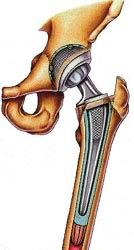
How to Improve Success of Joint Surgery

In 2002, there were almost 600,000 knee and hip replacement surgeries in the US (CDC Fast Facts). Factor in an increasingly older, and larger (obesity rates are positively blooming) population and it's not surprising that the American Academy of Physical Medicine and Rehabilitation forecasts a 60% rise in hip replacements alone over the next 30 years.

If you're considering joint replacement surgery, you may want to work with your physician to get your blood sugar and blood pressure levels under control first. A study by Duke University researchers appearing in the latest issue of Clinical Orthopaedics and Related Research found that people with diabetes experience a 30% increase in complications after such surgery. The obese tackle a 45% higher complication rate. And that number climbs to 75% if you're both diabetic and obese.

________

For a summary of the study:
Obesity, Diabetes Raise Joint Replacement Risks

Photo thanks to Physical Therapy - Canada.